Unofficial fan demo. Not affiliated with the film's makers or any cinema. Bookings here are samples — no payment is taken and no movie is hosted.

Independent film guide · 2026

Ramayana Part 1

2026 · Unofficial fan site

The film, the epic, and the stories behind them.

Explore Ramayana Part 1 through this independent, unofficial film guide: verified cast credits, the official trailer link and sourced release details, alongside original readings of the Ramayana. Film facts and source-epic interpretation are kept separate.

November 2026; dates vary by territory

  • Cast · official sources
  • Story · epic context
  • Artwork · original fan illustrations
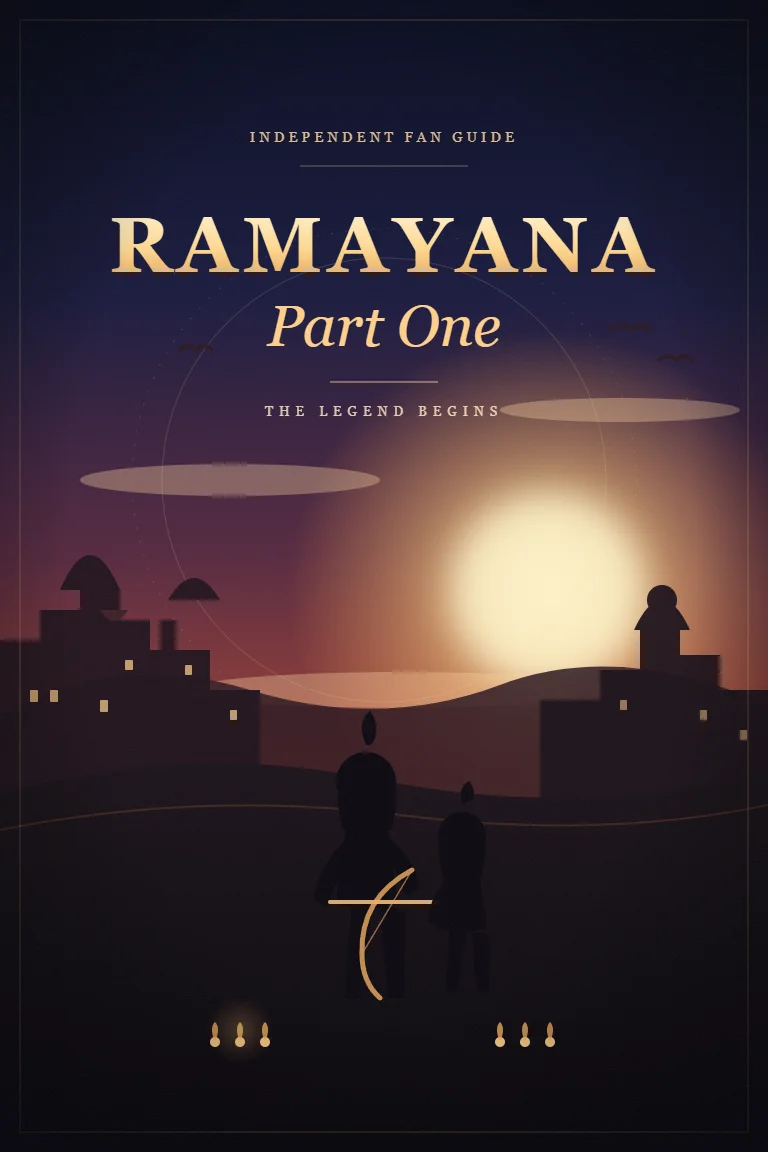
Original Ramayana-inspired fan artwork for the independent Ramayana Part 1 guide, not an official film poster

Original project-created fan artwork, not an official poster, actor photograph or film still.

Quick booking Pick a show in seconds

: Movie Details :

The epic, the cast and the release at a glance — sourced where possible, with anything unconfirmed labelled. Dates and formats vary by territory.

  • Movie Name Ramayana Part 1 (also listed as Ramayana: Rise of a Legend)
  • Based On Valmiki's Ramayana
  • Director Nitesh Tiwari
  • Stars Ranbir Kapoor, Sai Pallavi, Yash, Ravi Dubey, Sunny Deol
  • Genres Mythology, Epic, Drama, Action
  • Formats 2D 3D IMAX 3D Dolby Atmos sample formats used in the demo
  • Language Hindi (Original)
  • Runtime Not confirmed (not published in the sources used)
  • Release Date 5 November 2026 (Singapore listing; dates vary by territory)
  • Certificate Not confirmed (varies by territory)
  • Music Hans Zimmer & A. R. Rahman
  • Country India

Ayodhya stands at the height of its golden age when a single decree reshapes the life of its most beloved prince. Rama — eldest son of King Dasharatha, calm beyond his years and bound to Sita by a devotion that songs still carry — is asked to trade the throne for fourteen years in the forest. He accepts without argument. Sita and Lakshmana refuse to let him walk that road alone. Past the city gates the story widens: hermitages under threat, a golden deer, an oath that pulls the epic across the sea, and a prince forced to weigh the quiet of exile against the duty of a king. Ramayana: Part 1 follows Valmiki’s tale at its most human — a family, a promise and a forest that keeps reshaping both — before the legend turns toward Lanka, where the second part waits.

Sources and how uncertainty is handled
The Ramayana reading room

Beyond the spectacle.
Inside the story.

An independent fan essay on the choices, relationships and symbols behind the epic. Read in order, or find your own doorway.

Duty & powerWhat makes a ruler?
Home & exileWhat do we carry with us?
Choice & courageWhat is worth protecting?
Reader’s note Contains story details from the source epic, not a scene-by-scene review. Traditions differ; the film’s exact choices are not assumed here.

Before the armies gather, a family has to decide what a promise is worth. That is one doorway into the Ramayana: not the size of its battles, but the intimate choices that make those battles matter. A crown, a pair of sandals, a journey away from home — small things become the weight-bearing details of an enormous story.

A story told in two parts

Valmiki’s Ramayana is traditionally described as an epic of roughly 24,000 verses. Alongside it lives a vast family of regional, devotional, theatrical and oral retellings. The version someone first encounters at home may emphasise a different relationship or moment from the version another reader knows. Approaching a new film with that awareness makes comparison richer than a checklist of matches.

Ramayana: Part 1 has been announced as the first half of a two-part adaptation. That structure offers room for the court of Dasharatha, the bond between brothers, the marriage of Rama and Sita, and the promises that turn an heir into an exile. A longer canvas can let the quieter decisions carry their own dramatic weight, rather than treating everything before Lanka as a prologue to war.

In the source epic, exile leads through encounters in the forest to Sita’s abduction and the search for her. Those events provide useful context, not a confirmed running order or endpoint for this film. Dividing an adaptation into parts is a filmmaking choice; it is not the same thing as reproducing the divisions of the text.

From palace to forest

The movement away from Ayodhya changes more than the scenery. A palace makes rank visible through ceremony, space and the people who obey. The forest removes those familiar assurances. Rama has to inhabit his responsibilities without the comfort and authority that ordinarily come with being a prince. In that contrast, dharma becomes a difficult practice rather than an impressive word.

It is tempting to translate dharma simply as duty, but the story keeps showing duties pulling in different directions. Responsibility to a parent can conflict with responsibility to a kingdom; protection can conflict with another person’s freedom to choose. The interest lies in the cost of a decision, not just in identifying which character is supposed to be right.

Not every act of courage looks like a battle.A reading of the epic — not dialogue from the film

The forest is also a lived world, not an empty backdrop waiting for royal visitors. Hermitages, communities, animals and strangers all change the travellers’ understanding of their place. Watch an adaptation for how much attention it gives that world: who is allowed to speak, who offers shelter and whose loss is noticed.

The people at the centre

Ranbir Kapoor is listed as Rama, Sai Pallavi as Sita, Yash as Ravana and Ravi Dubey as Lakshmana. Beyond recognising a cast, a useful way into the drama is to follow relationships. Rama is a son and brother as well as a prince; Sita is a partner with convictions of her own; Lakshmana’s loyalty gives him both purpose and painful limits. The same person can occupy several roles that make incompatible demands.

Performance can reveal those tensions in small ways: who waits before answering, who avoids another person’s gaze, or who keeps standing after everyone else has sat. These are possibilities to look for, not claims about particular scenes. A spectacle becomes emotionally legible when its smallest exchanges mean something.
Official trailer Ramayana — Official Trailer Sony Pictures Entertainment Watch on YouTube
Original fan-made link card, not an official thumbnail or film still. The trailer itself opens on Sony Pictures Entertainment’s YouTube channel in a new tab; no video is hosted or embedded here.

Sita and the power of choice

A reading centred only on rescue can miss the force of Sita’s own decisions. Her insistence on accompanying Rama into exile makes her a participant in the journey, not luggage carried from one setting to another. Leaving comfort behind raises a question different from simply enduring hardship: what does partnership mean when one person tries to decide which burdens the other should bear?

Later, captivity places severe limits on what she can physically do. Limits on movement are not the same as the absence of agency. Refusal, speech, memory and the preservation of conviction can all matter. Different tellings give these moments different emphases, so it is worth noticing whose perspective an adaptation lets the audience inhabit, rather than measuring a character’s importance only by the number of action scenes they receive.

This also changes how we look at domestic scenes. A conversation about leaving home can hold as much conflict as a confrontation with an enemy. Listen for whether care is expressed as protection, trust, persuasion or control. The distinction is often where the emotional complexity lives.

Four brothers, different forms of loyalty

Lakshmana’s loyalty is visible because he chooses to accompany Rama. Bharata’s is tested by distance: he must respond to a throne he did not seek and an absence he cannot simply undo. In the familiar account, Rama’s sandals become the sign of the authority Bharata holds in trust. He does not need to occupy the centre of the journey to carry a demanding part of its moral argument.

Shatrughna is easier to overlook when a retelling concentrates on the forest, yet his bond with Bharata reminds us that a household does not stop needing care when its most celebrated members leave. Remaining behind can mean managing consequences, listening to grief and taking responsibility for ordinary continuity. The story has room for loyalty that does not announce itself as a grand sacrifice.

Taken together, the brothers offer more than one model of devotion: accompanying, safeguarding, serving and waiting. None makes the others unnecessary. For a viewer, this is a useful counterweight to the assumption that the most visible character is always doing the most important work.

When knowledge is not wisdom

In many traditions, Ravana is learned, powerful and devoted, yet those qualities do not excuse his coercion or his treatment of Sita. That tension gives the antagonist depth without making the harm less serious. Intelligence is not the same as sound judgement, and a person’s accomplishments do not make everyone else’s boundaries negotiable.

A particularly revealing dramatic question is how power responds to advice. Does a ruler hear an unwelcome warning, or treat disagreement as disloyalty? Does another person remain a person, or become something to possess? These questions make pride legible through behaviour. They are more useful than taking an imposing crown, an enormous palace or an impressive entrance as sufficient explanation.

The contrast with Rama is therefore not only a contest of strength. It invites a comparison between possessing power and accepting limits on its use. An adaptation can make that comparison through parallel choices long before its armies meet.

Listening to the epic

Hans Zimmer and A. R. Rahman are credited with the film’s music. Rather than predicting particular instruments or themes, listen for how music changes your relationship to a place or a person. A melody heard in safety can mean something very different when it returns after separation. Familiarity becomes part of the storytelling even when no one explains the connection in dialogue.

Sound design deserves the same attention. Footsteps in an open court, the density of a crowd, the distance of a voice or a sudden absence of background sound can all shape a scene. Loudness alone is a poor measure of immersion. A quiet passage may make an auditorium feel larger than a full-volume battle because it gives the listener room to notice distance and direction.

Dolby Atmos describes a sound presentation, not whether the picture is 2D or 3D. A venue may combine different picture and sound systems. If the score is your priority, check the sound specification as well as the screen label, and choose a show whose volume and seating are comfortable for you.

Small objects, enormous meanings

The sandals associated with Bharata are a striking example of an ordinary object carrying political meaning. They stand in for an absent person while making clear that stewardship is not ownership. The object matters because of a relationship and a promise, not because it is visually spectacular. Cinema can make such an object memorable through where it is placed, who touches it and when the camera returns to it.

The bow works differently. It can express capability, discipline, protection or the threat of force, depending on the circumstances. An arrow not released may tell us as much about a character as one that strikes its target. Watching for restraint prevents the action from becoming merely a tally of victories.

The golden deer belongs to another kind of visual language: beauty, desire and deception becoming difficult to separate. Notice how a retelling makes an unusual object attractive before making its danger clear. These are suggested ways of reading the epic’s symbols, not a single definitive meaning that every community or adaptation must share.

Make the cinema work for you

A premium label is useful only if it describes something you actually enjoy. Large-format projection favours scale; 3D adds a depth presentation and requires glasses; immersive sound concerns the soundtrack. Motion-seat presentations add physical effects that some audiences enjoy and others find distracting. None of these is a substitute for clear projection, intelligible dialogue and a comfortable seat.

Consider the whole outing: travel time, a show that finishes at a sensible hour, accessible seating, subtitle availability and the auditorium’s own policies. For glasses-free viewing, confirm a 2D show. For a still seat, check that motion effects are not part of the presentation. Ask the venue directly about accessibility or suitability requirements rather than inferring them from a format badge.

Our cinema-style finder explains the trade-offs and can filter the sample showtimes below. It does not check real availability or compare live prices. The film’s available formats, the cinema’s equipment and the specification of a particular show must all be confirmed with the actual venue.

What changes between a page and a screen?

A text can pause to explain a thought; a film often has to make that thought visible through action, framing or sound. A long passage may become one look, while a brief encounter may be expanded into a scene. Changes of this kind are not automatically losses or improvements. The useful question is what a choice enables the audience to understand, and what it leaves less visible.

Point of view is especially important. When the camera stays with the person departing, exile feels like a journey. When it stays with the people left behind, it feels like absence. Both can be true at once, but a film has to distribute our attention in time. Looking for those shifts helps explain why two adaptations of familiar events can feel very different without either inventing a different event.

Comparison is most rewarding when it stays specific. Instead of deciding that a version is simply more faithful, ask faithful to which telling, which relationship or which idea. Regional and devotional traditions do not all make the same choices. Respectful discussion can acknowledge that variety while still examining a film’s craft closely and disagreeing about its interpretation.

After the credits

A divided adaptation leaves space for anticipation, but the strongest reason to return is not just an unfinished plot. It is an investment in what the characters have already chosen and what those choices may cost. In the source epic, the search, alliances and journey toward Lanka broaden the world; whether and how this film divides that material is something to judge from the finished work, not a fan outline.

Give yourself a few questions to carry out of the auditorium. Which quiet moment stayed with you? Did your understanding of a character change when someone else described them? Was there a moment when music or silence did more than dialogue? These questions invite a more personal response than ranking the largest set-piece, and they make a second conversation as worthwhile as a second viewing.

Three things to take with you
  • Look for the choice. What could the character have done differently?
  • Notice the cost. Who lives with the consequences?
  • Leave room for another telling. Familiar stories can hold different perspectives.

This is original fan commentary, not an official synopsis, a verified review or a claim to speak for every Ramayana tradition. It discusses widely retold source-epic material and offers viewing questions; it does not confirm the film’s scenes, precise ending or technical availability. Promotional images remain the property of their respective rightsholders.

: The Story So Far :

Six chapters from Ayodhya to the edge of the forest. A fan-written summary drawn from Valmiki’s Ramayana — the film’s own telling may differ.

  1. Chapter one · Ayodhya

    The golden court

    Dasharatha rules a city at peace, and his four sons have grown into the princes a kingdom hopes for. Rama, the eldest, is already treated as the heir. The epic begins with everything in its right place — which is exactly why the next chapter hurts.

  2. Chapter two · Mithila

    The bow that would not bend

    In Mithila, King Janaka has set a trial for his daughter Sita’s hand: lift and string the great bow of Shiva. Champions fail until Rama steps forward. The bow breaks, the wedding follows, and two kingdoms are joined by a promise.

  3. Chapter three · The decree

    A promise older than a throne

    On the morning of the coronation, Dasharatha is forced to honour an old vow to Queen Kaikeyi: Bharata will rule, and Rama will spend fourteen years in exile. Rama accepts without argument. Sita and Lakshmana choose to walk beside him.

  4. Chapter four · Panchavati

    The forest is not empty

    The exiles build a life among hermitages, learning the forest’s rhythms and the names of its people. Sages ask for protection from raiding demons; Rama gives it. Each promise draws the three of them deeper into a conflict that began far from Ayodhya.

  5. Chapter five · Dandaka

    The golden deer

    A deer of gold appears at the edge of the clearing. Sita asks for it; Rama follows it into the trees; Lakshmana is sent after him. In their absence an ascetic arrives at the hermitage with a request — and the story turns.

  6. Chapter six · The threshold

    The search begins

    The trail leads through grief and fire: a wounded vulture, a forest of new allies, and a prince deciding what kind of force is worth gathering. A first film is widely expected to pause near the search, with Lanka still across the sea — but the sources used here do not confirm the endpoint.

Where the curtain falls. Fan discussion often expects Part 1 to cover the Ayodhya years and the exile up to the search for Sita, with the causeway, war and return in a later part. The sources used here do not confirm that endpoint, so treat it as an expectation rather than a verified synopsis.

: Cast & Characters :

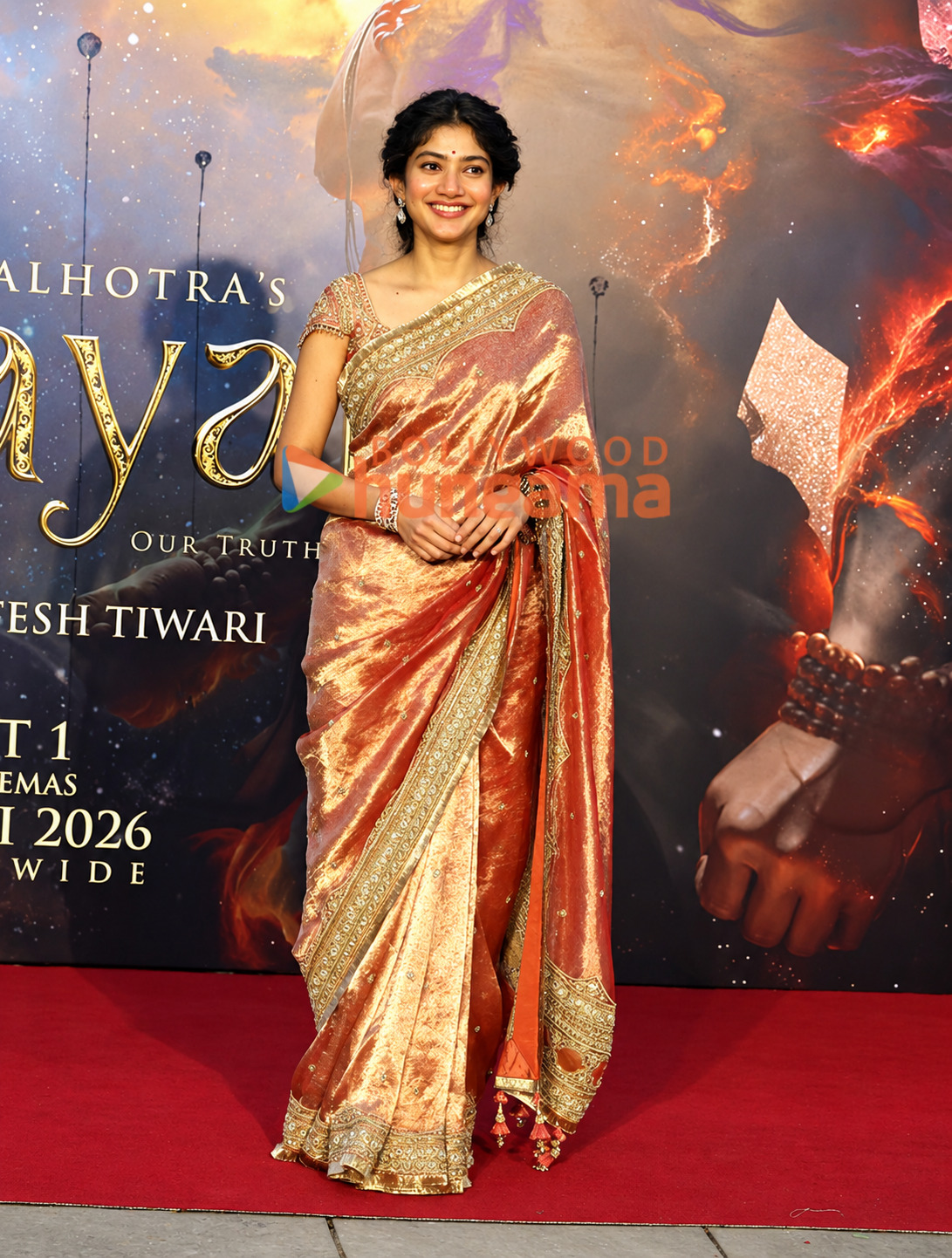
Cast and character portraits with credited sources. Sai Pallavi’s card uses a CC BY 3.0 event photograph by Bollywood Hungama; the other portraits are original illustrations.

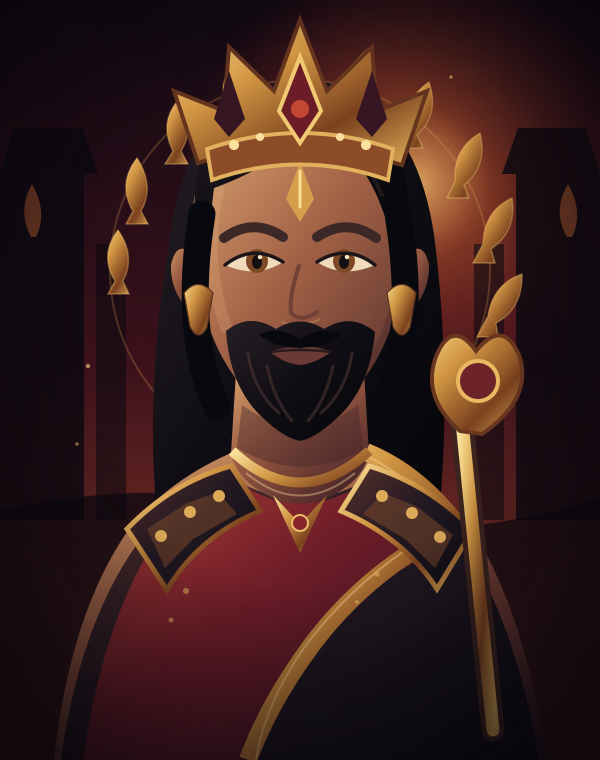
Original character illustration of Rama with a golden bow and crown at sunrise; not an actor likeness
The exiled prince

Rama

Ranbir Kapoor

He would rather persuade than command, and Part 1 keeps testing whether that calm is strength or surrender. Every promise he keeps costs him something a prince is raised to value.

  • Duty
  • Calm
  • The bow
Sai Pallavi at the Ramayana special launch event in September 2026; event photograph by Bollywood Hungama, CC BY 3.0
The queen who chooses

Sita

Sai Pallavi

Written as a queen who decides, not a prize to be won: she leaves the palace for the forest by her own choice and becomes the story’s sharpest test of loyalty and judgement.

  • Resolve
  • Choice
  • The vow

Photo: Bollywood Hungama, CC BY 3.0, via Wikimedia Commons. Event photo, not a film still.

Original character illustration of Lakshmana with a teal sash and quiver in a moonlit forest; not an actor likeness
The brother who follows

Lakshmana

Ravi Dubey

Where Rama is patient, Lakshmana is flame — fiercely protective, quick to anger and willing to guard a perimeter for fourteen years. His devotion is the counterweight to his brother’s restraint.

  • Loyalty
  • Guard
  • The line
Original character illustration of Ravana in blackened gold armour framed by ten ceremonial flames; not an actor likeness
The king of Lanka

Ravana

Yash

Learned, devout and insatiably proud, the king of Lanka is not written as a simple villain. The epic’s darkest turn comes from a man who believes his power places him beyond consequence.

  • Learning
  • Pride
  • Ten crowns
Another confirmed role

Sunny Deol as Hanuman

The casting below is sourced separately from the original character artwork.

Sunny Deol

Hanuman

Named in DNEG’s official announcement. No actor photograph is reproduced here.

Actor and character pairings: DNEG’s Ramayana announcement (which spells Ravi Dubey as “Ravie Dubey”). Principal cast credits: Sony Pictures Singapore. Character descriptions are source-epic commentary, not verified film scenes. Except for the credited Sai Pallavi event photograph, the portraits are original project SVG illustrations, not actor likenesses or film stills.

: Original Artwork :

Eleven original illustrations inspired by the Ramayana — six story scenes and five character pieces. Tap any image to enlarge. None is a film still or official promotional image.

Eleven original project SVG illustrations inspired by the source epic. These are fan interpretations, not official film stills, actor photographs or evidence of scenes in Part 1. No film or trailer is hosted or embedded here. See our editorial and artwork policy.

: Formats & Seats :

How the epic is presented on the big screen, and what each seat tier in the demo gives you. Availability varies by cinema — the listings here are samples.

Your cinema, your way

Find your
kind of epic.

Bigger isn’t always better. Tell us what matters to you and explore a presentation that fits.

2 questions · No sign-up · Nothing stored
01 What brings you to the cinema?
02 Set your comfort preference

An editorial suggestion, not a live availability or price check. Formats can overlap; confirm the exact picture, sound and seating with your cinema.

01 Understand the presentations

IMAX 3D

The widest canvas for the city, the forest and the sea. Large-format screens give the landscapes room to breathe.

Best for · scale and spectacle

Dolby Atmos

Object-based sound that places the score, the crowds and the weather around the room instead of in front of it.

Best for · the music and the storm

4DX

Motion seats, wind and light cues timed to the action. A louder, more physical way to meet the battle scenes.

Best for · feeling every set-piece

2D

The plain, dependable presentation — a classic frame, a comfortable seat and the story at the centre.

Best for · first-time viewers

02 Choose a seat tier

Classic

₹260
Rows A–H

Full-width view from the front of the house — the busiest rows on opening weekend.

Prime

₹340
Rows J–N

Centre rows at eye level, and the tier the demo starts you in by default.

Recliner

₹520
Row Q

Loungers at the back of the house with extra room and a clear line to the screen.

Demo prices in Indian rupees, plus a ₹15 convenience fee per ticket. Nothing is charged — the checkout is a walkthrough.

: Showtimes :

Sample showtimes across 32 fictional cinemas in 8 cities. Pick a city, then a cinema and a time to try the demo booking flow.

All cinemas, locations and showtimes are invented sample data across 8 cities. Choose any time to carry it into the booking demo below.

Now showing · 8 cities · 32 sample cinemas

A seat in the epic for every city

Pick your city, cinema and showtime, choose exact seats on the map and follow the demo right through to a ticket-style confirmation.

Book Seats Demo only — no payment, no real reservation.

: Book Tickets :

Choose a show, select exact seats on the map and confirm. Demo checkout — no payment is taken.

1 Pick your show

2 Choose your seats 2 selected

  • Available
  • Selected
  • Sold

Prime · J7, J8

Your seats
Tickets Up to 6 · the stepper adds or removes seats
2
#RamayanPart1 #RamayanaPart1 #NiteshTiwari #RanbirKapoor #SaiPallavi #HansZimmer #ARRahman #Ramayana Part 1 #HindiMovie #Mythology
The guide library

Go deeper into the epic

Four independent, source-cited guides for readers who want the story and its traditions beyond the film page. Each one names its sources and separates evidence from interpretation.

: Frequently Asked Questions :

Straight answers about this fan page, the demo booking and the film.

Is Ramayana Part 1 an official booking partner for Ramayana Part 1?

No. This is an unofficial fan page. It is not affiliated with the filmmakers, studios or any cinema chain, and the booking flow is a demonstration rather than a real ticketing service.

Can I actually buy a ticket on this page?

No. The booking form runs entirely in your browser and no payment is requested or processed. Nothing you type is sent or stored. To buy a real ticket, use the official booking channels of a cinema near you.

Does this page host or link to the movie?

No. There is no video file, stream, download or embedded player here. The page contains written commentary and promotional images. The official trailer link opens Sony Pictures Entertainment's video on YouTube in a new tab; it does not play on this site.

Are the images on this page official?

No. The poster, gallery and character portraits are original project illustrations. Sai Pallavi’s cast card uses a CC BY 3.0 event photograph by Bollywood Hungama, credited in that section. No official film still, poster or trailer thumbnail is reproduced. The trailer link opens Sony Pictures Entertainment's official video on YouTube in a new tab; it does not play on this site.

Which formats and language is the film available in?

The original language is Hindi. The demo booking uses 2D, 3D, IMAX 3D and Dolby Atmos as sample formats; official format availability differs by cinema and is not confirmed in the sources used here. Check the specific auditorium before booking a real show.

Why do the cinemas and showtimes look generic?

All cinemas, areas and showtimes on this page are invented sample listings arranged across real city labels. They exist to demonstrate the booking interface and do not represent real venues or schedules.

How accurate is the information on this page?

This guide compiles film facts from Sony Pictures Singapore and DNEG's casting announcement, and epic context from educational sources cited in the story guides. Runtime, certificate and the exact Part 1 endpoint were not available in those sources, so they are marked unconfirmed rather than guessed. Read the editorial policy for how corrections are handled.

Where does the story of Part 1 end?

No official scene-by-scene breakdown was available in the sources used here, so this guide does not claim where Part 1 ends. It labels fan expectations as expectations. Treat any specific endpoint you see online as unconfirmed until the filmmakers or distributor publish it.

How does the demo seat map work?

Pick a show, then tap any available seat on the map, up to six. Rows A–H are Classic, rows J–N are Prime and row Q holds the Recliner loungers. Sold seats are greyed out and the pattern resets when you change the show. Your chosen seats appear as chips below the map; tap a chip to remove that seat while at least one stays selected. The selection is a demo and reserves nothing.

What do the Classic, Prime and Recliner seat tiers mean?

Classic covers rows A–H at ₹260, Prime covers rows J–N at ₹340, and the Recliner loungers sit in row Q at ₹520 in the demo. A ₹15 convenience fee is added per ticket. These are sample prices for the walkthrough; a real cinema sets its own.

Why do only some seats show as sold?

Sold seats are generated from the selected city, cinema, date and showtime, so the pattern changes when you change the show. They are sample data, not a live availability feed.

Ramayana Part 1 · 2026 Hindi · Fan guide · 2026
Book Now