
The Ramayana library
Ramayana Story: Exile, Search, Battle and Return
The Ramayana story connects a disputed succession, an exile, a search for Sita and a war in Lanka. Its deeper tensions concern promises, family loyalty and the costs of public duty. This guide maps that narrative without treating every telling as identical.
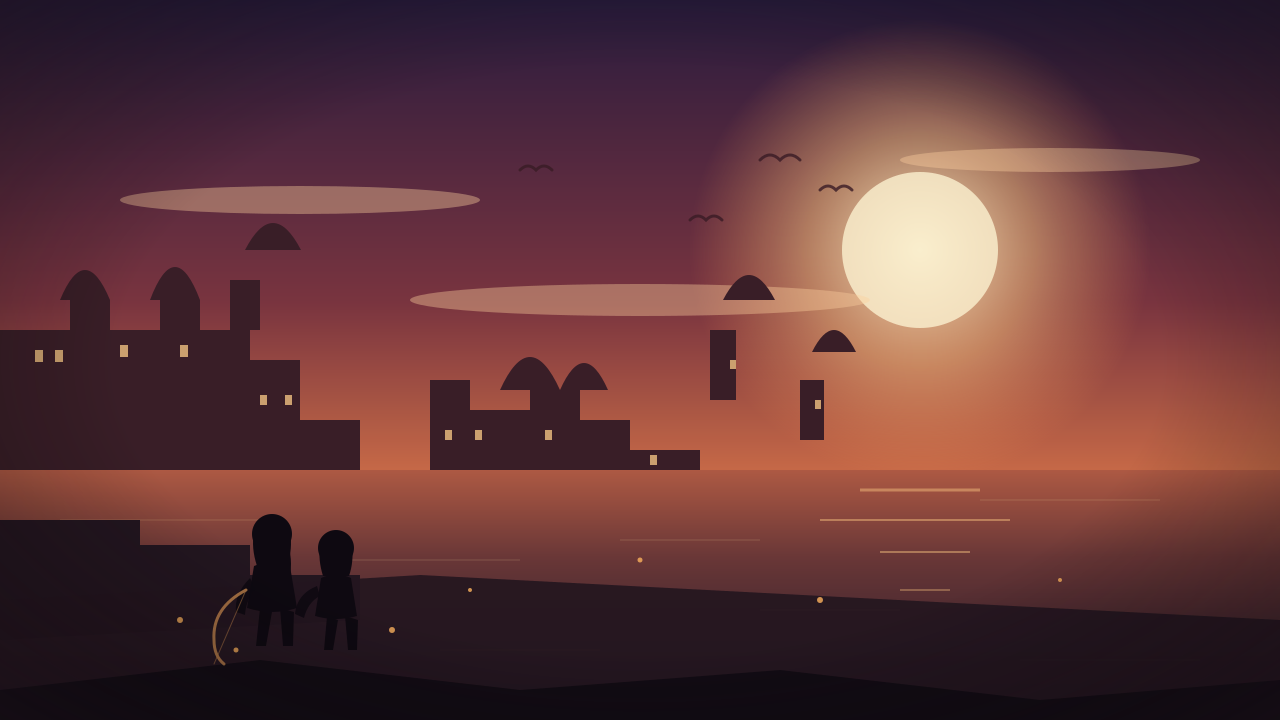
Which Ramayana story is this?
The Sanskrit Ramayana is traditionally attributed to the poet-sage Valmiki. Yet a guide to the epic needs to distinguish that attribution from the wider storytelling tradition. In Philip Lutgendorf's essay hosted by Syracuse University, poets, performers and families do more than translate a fixed text: they reshape a shared narrative through language, regional practices and interpretation.
Here, the event sequence chiefly follows Syracuse's brief synopsis, with Lutgendorf's essay supplying the broader frame. This is a starting map, not a chapter-by-chapter account of Valmiki's text. Even a familiar sequence can carry different meanings when a storyteller changes whose experience receives attention.
The succession and forest exile
Lutgendorf's outline introduces Rama as a prince who gains Sita as his bride. Syracuse's more detailed synopsis begins later, with King Dasaratha intending Rama to succeed him. Kaikeyi invokes two promises owed to her and demands that Bharata become king instead, while Rama spends fourteen years in the forest.
In that synopsis, Dasaratha reluctantly agrees, and Rama leaves with his wife Sita and brother Lakshmana, spelled Laksmana in the source. The displacement turns royal succession into a family crisis: one person's promise alters the lives of several others. The forest is therefore not merely a picturesque setting; it is where the consequences of the court's decisions unfold.
This opening also helps explain why duty is not a simple slogan. Keeping an obligation may hurt someone else. Reading the exile as a conflict between responsibilities, rather than a list of exemplary acts, prepares us for the harder choices later in the narrative.
Sita's abduction and the search
According to Syracuse's synopsis, Surpanakha approaches Rama in the forest, is rejected, and is wounded by Lakshmana. She goes to her brother Ravana, the ruler of Lanka. After hearing about Sita, Ravana approaches in the disguise of a holy man and carries her away while Rama and Lakshmana are distracted.
The source describes Sita grieving in Ravana's garden. This is abduction and captivity, not a consensual romance. Keeping that distinction clear prevents the spectacle of a powerful antagonist from displacing the experience of the person he has harmed.
Rama and Lakshmana seek help finding her. The story now expands beyond the royal household: recovering contact with Sita requires an ally who can reach Lanka. Separation changes the practical problem from defending a family to discovering where someone is and how to communicate across that distance.
Hanuman's mission to Lanka
In the Syracuse account, Hanuman can change his size and crosses to Lanka carrying Rama's ring. He finds Sita and identifies himself as Rama's messenger. The ring links the stranger before her to the person searching for her; the meeting gives the search a human purpose beyond locating a fortress.
Hanuman is then captured, and Ravana has his tail set alight. Hanuman escapes and sets Lanka on fire. The episode shifts from communication to confrontation, but his earlier achievement should not disappear behind the action: before an army arrives, Sita receives contact from Rama's side.
Battle, return and a difficult aftermath
A military victory is not the whole ending
Syracuse's synopsis describes a bridge built by the monkey forces, a siege of Lanka and a prolonged battle in which Rama kills Ravana. Lutgendorf's broad outline includes Rama's triumphant return and recovery of his throne. These are major narrative resolutions, but they do not exhaust the questions raised by the story.
Sita's treatment after rescue
The brief synopsis continues with Rama questioning Sita's chastity. She undergoes a trial by fire, survives unharmed and rejoins him. Later, Rama abandons her in response to public opinion. She lives at Valmiki's ashram and bears the twins Lava and Kusa, who eventually meet their father.
These events describe the source's narrative; they do not make suspicion toward an abducted woman justified. The gap between victory and Sita's security is essential to understanding the aftermath. It asks whether restoring a ruler's position also restores justice to everyone affected by the conflict.
Common questions
Is this the complete Valmiki Ramayana?
No. This is a selective guide based on two educational pages, not a translation or full textual commentary. The traditions guide explains why naming a source matters.
Does the Ramayana end with Ravana's defeat?
Not in the Syracuse synopsis used here. It continues through Sita's trial, later separation and life at Valmiki's ashram. A short retelling may choose a different stopping point.
Will all these events appear in the first film?
This article does not establish that. An epic synopsis cannot confirm an adaptation's selected episodes or endpoint, and this guide is not a review of the film.
Where to go next
Keep two questions alongside the plot: whose telling are you reading, and whose choices receive attention? Together they make room for the epic's adventure and its unresolved ethical tensions, without mistaking a single summary for the whole tradition.
Sources
- Syracuse University, South Asia Center: The Story of Rama: A Brief Synopsis. Source for exile, abduction, Hanuman's mission, battle and Sita's later separation.
- Philip Lutgendorf, The Oral Tradition and the many “Ramayanas”, hosted by Syracuse University. Source for Valmiki's place in the tradition, the marriage-and-return outline and interpretive diversity.